Welcome to this website!

Leave Your Message

10 Best Basket Colanders for Global Buyers

Choosing the right Basket Colander can make everyday food preparation cleaner, faster, and less wasteful. For global buyers, the decision involves more than attractive design. Kitchen size, water pressure, cookware compatibility, shipping conditions, and local cleaning habits can change the best choice.

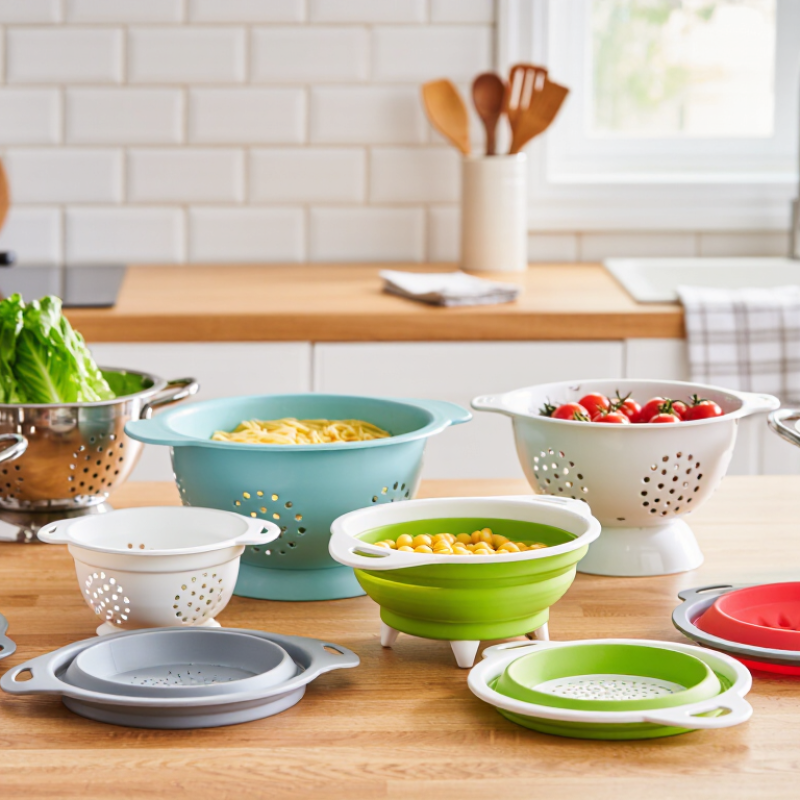
Daniel Mercer, a food-preparation equipment consultant with experience evaluating household strainers, says, “A dependable colander should drain quickly, remain stable, and feel comfortable after repeated use.” That practical test matters. A wide bowl may handle pasta well, while a compact basket suits small sinks and limited storage. Stainless steel offers strength and heat resistance. Food-grade plastic can reduce weight and protect delicate cookware. Silicone models often fold neatly, though their flexibility may feel less secure under heavy ingredients.

Small details matter.

This guide compares ten leading Basket Colander options for buyers across different markets. It considers drainage speed, basket depth, handle design, foot stability, material quality, cleaning ease, and likely long-term value. Product availability and regional pricing can change, so readers should verify specifications before purchasing. Some choices may look excellent online but feel awkward when filled with wet vegetables. That is an easy detail to miss.

The selection is not perfect. Personal preferences, kitchen layouts, and local water conditions still influence performance. Even so, these comparisons provide a practical starting point for selecting a reliable basket colander for pasta, produce, grains, and daily meal preparation.

10 Best Basket Colanders for Global Buyers

What Is a Basket Colander and How Does It Work?

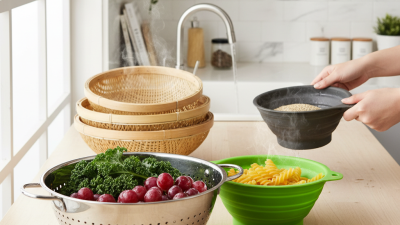
A basket colander is a perforated kitchen basket used to separate food from water. It usually has a curved bowl, drainage holes, and supporting feet or handles. The basket holds pasta, vegetables, fruit, or rinsed grains while liquid flows away. It drains fast.

Its design depends on gravity. Water passes through the holes, while larger food pieces remain inside. A colander placed over a sink sends water directly into the basin. A footed model can stand inside a pot or on a countertop. Handles improve control when the basket contains hot pasta, but they may reduce storage space. Hole size also matters. Fine holes suit rice and small berries, while wider openings drain noodles quickly.

Material affects daily performance. Stainless steel resists staining and tolerates heat, while food-grade plastic feels lighter and may be easier for children to handle. I have found that thin baskets can flex under heavy potatoes. That small weakness becomes frustrating during frequent cooking. Some products claim easy cleaning, yet food can remain around folded rims or narrow joints. Buyers should check the basket’s balance, hole pattern, load capacity, and dishwasher guidance. A smooth interior is easier to inspect after washing. For international kitchens, dimensions deserve attention because sink sizes and cabinet storage vary widely. A basket that works well in one home may feel awkward in another.

Key Features to Compare in the Best Basket Colanders

Choosing among the best basket colanders requires more than checking size and appearance. Material affects durability, weight, and food safety. Stainless steel resists stains and odors, while food-grade plastic feels lighter and quieter. A thick rim also matters because thin edges can bend under heavy vegetables.

Examine the perforation pattern closely. Small, evenly spaced holes drain rice and pasta without losing smaller pieces. Larger openings release water faster but may allow peas or herbs to escape. The basket should have strong side handles that stay cool and remain comfortable with wet hands. Test the base, too. A raised, stable foot keeps the basket above a sink or countertop.

Capacity should match real kitchen use. A compact basket suits berries or one serving, while a larger model handles pasta for several people. Nesting designs save cabinet space, especially for buyers managing limited storage. Smooth interiors simplify cleaning, but narrow corners can still trap food. I have found that attractive polished surfaces may show water spots quickly. That is not a serious flaw, but it affects daily maintenance.

For global buyers, review food-contact information, heat tolerance, and care instructions before ordering. Measurements can also vary between regions, so confirm both volume and dimensions. A colander that looks spacious online may feel surprisingly small in practice. Reliable product details should state material grades, load limits, and drainage design clearly.

Materials, Sizes, Shapes, and Drainage Designs Explained

10 Best Basket Colanders for Global Buyers

Materials, Sizes, Shapes, and Drainage Designs Explained

Choosing among the 10 best basket colanders starts with material, not appearance. Stainless steel handles heat well, resists odors, and survives repeated washing. Food-grade plastic is lighter, quieter, and less likely to scratch a sink. Silicone-coated models add grip, but soft rims can hold moisture if poorly dried. For wholesale buyers, inspect mesh joins, handle strength, and surface smoothness before ordering. Small flaws become expensive returns.

Size should match the common task. A 1.5- to 2-liter basket suits berries, herbs, and one or two servings. Larger 4- to 6-liter baskets handle pasta, leafy vegetables, and family portions. Measure the sink opening and storage shelf, because a wide bowl may not sit securely. Round colanders rotate easily under running water, while rectangular shapes suit narrow sinks better. Collapsible designs save space, though their folds deserve close inspection. I once underestimated this detail. Not always ideal.

Drainage design affects washing speed and food quality. Perforations should cover the base and sidewalls, rather than gathering in one area. Fine holes protect small grains and herbs, but they drain slowly and may trap pulp. Larger slots release water quickly from pasta, yet delicate leaves can slip through. Raised feet keep the basket above dirty sink water and improve airflow underneath. A stable foot matters more than a clever folding mechanism. For cross-border purchasing, request food-contact documentation and independent sample inspection. Check whether the rim stays firm when full; product descriptions can mislead.

How to Choose a Basket Colander for Different Kitchens

Choosing a basket colander starts with kitchen workflow, not appearance. In a compact apartment, a 20-centimeter basket may fit the sink, cabinet, and dishwasher. A deep bowl suits pasta, but it can trap water when rinsing herbs. Small kitchens differ. Measure twice. Check sink width, faucet clearance, and storage depth. A collapsible model saves space, yet thin hinges may feel unstable under potatoes. That trade-off deserves attention.

For family kitchens, capacity and grip matter more. Select a basket that holds one meal without burying food below the waterline. Wide drainage holes release water quickly, while smaller holes retain rice, lentils, and chopped herbs. No single hole pattern handles every task. A raised base keeps food above dirty sink water. Non-slip handles help when lifting wet noodles. I prefer a balanced frame over an oversized bowl because weight increases quickly. This choice is practical, though not ideal for very large batches.

Material should match heat, cleaning habits, and local water conditions. Stainless steel resists odors and tolerates frequent washing, but it can scratch delicate sinks. Food-grade plastic feels lighter and quieter, yet it may stain after tomato or curry use. Silicone folds neatly, although its soft rim can sag when fully loaded. Look for smooth seams, secure handles, and clear food-contact information. Inspect the underside after washing. Hidden residue often appears there. Read care instructions, because assumptions about heat resistance can become costly mistakes.

How to Evaluate the 10 Best Basket Colanders for Global Buyers

Evaluating the 10 best basket colanders for global buyers requires more than comparing appearance. Start with food-contact material, wall thickness, and corrosion resistance. Stainless steel should feel rigid, not thin or sharply finished. Food-grade plastic should remain stable during boiling-water contact. Check the drainage holes closely. Even spacing helps water leave quickly while retaining rice, pasta, and small vegetables. Very large openings can waste ingredients.

Measure the basket, handles, and storage footprint before ordering. A colander that fits a local sink is more useful than a visually attractive model. Test its base on a wet counter. It should stay steady when filled with two kilograms of pasta. Side handles need enough clearance from hot steam. I once preferred lightweight designs for easier shipping. That judgment was incomplete; weak rims can bend during transport. Buyers should also review packaging strength, care instructions, replacement availability, and clear product measurements. Regional plug issues do not apply here, but local kitchen dimensions certainly do.

Tips: Compare usable capacity, not only the advertised diameter. Rub the inner surface gently; rough spots may trap food and complicate cleaning. Ask suppliers for material documentation and factory quality checks. For international orders, confirm carton dimensions, gross weight, and moisture protection. Do not trust photographs alone. A sample inspection can reveal unstable feet, loose handles, or drainage that is slower than expected. Small details matter.

10 Best Basket Colanders for Global Buyers - How to Evaluate the 10 Best Basket Colanders for Global Buyers

Rank Basket Colander Type Typical Material Typical Capacity Typical Diameter / Size Drainage Design Heat Resistance Dishwasher Suitability Storage Efficiency Best Global-Buyer Use Case Evaluation Score Key Verification Point
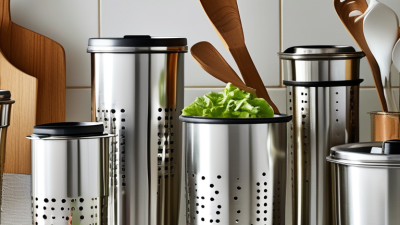
1 Stainless-Steel Perforated Basket Colander Food-grade stainless steel, commonly 18/8 or 18/10 3.0–5.0 L 24–28 cm diameter; 10–14 cm height Round perforations across the base and side walls Suitable for boiling-water draining and hot pasta Usually suitable High; stackable and resistant to deformation All-purpose household use, catering, and long-distance export 9.4 / 10 Confirm steel grade, wall thickness, rim smoothness, and resistance to rust or staining.
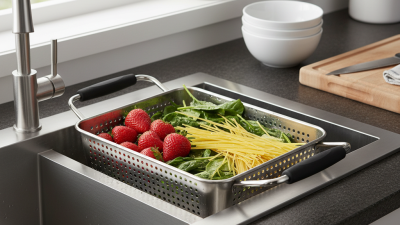
2 Over-the-Sink Expandable Basket Colander Stainless steel basket with coated or stainless sliding arms 4.0–8.0 L Adjustable length approximately 33–55 cm Perforated basket with elevated drainage above the sink Suitable for hot foods when handles remain away from heat Usually suitable Medium; arms retract for storage Large kitchens, food preparation, fruit washing, and vegetables 9.2 / 10 Check sink compatibility, non-slip end caps, load capacity, and locking strength of the arms.
3 Plastic Bowl Colander with Integrated Handles Food-contact polypropylene or high-density polyethylene 2.5–5.0 L 22–28 cm diameter; 11–15 cm height Molded drainage holes, often concentrated in the base Generally suitable for warm food; not normally intended for direct flame Model-dependent High; lightweight and often nestable Retail household sets, budget markets, and low-weight shipping programs 8.9 / 10 Verify food-contact compliance, odor retention, temperature limit, and resistance to cracking.
4 Collapsible Silicone Basket Colander Food-grade silicone with a rigid plastic or metal rim 2.0–4.5 L 22–27 cm diameter; collapses to about 4–6 cm high Perforated silicone base and flexible side walls Commonly suitable for hot food; exact temperature rating varies Often suitable Excellent; highly compact when folded Small kitchens, travel use, apartment living, and space-saving retail lines 8.8 / 10 Request temperature testing, silicone composition, fold-cycle durability, and odor evaluation.
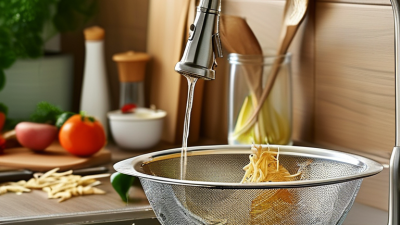
5 Fine-Mesh Basket Colander Stainless-steel mesh with a reinforced rim and handle 1.0–3.0 L 16–24 cm diameter; 8–12 cm height Fine woven mesh for small grains, quinoa, and rinsing Suitable for hot-water draining if the handle is heat-safe Usually suitable Medium; nesting is possible but mesh should not be crushed Rice, grains, flour rinsing, tea ingredients, and specialty food preparation 8.6 / 10 Inspect mesh uniformity, seam quality, handle attachment, and prevention of sharp wire ends.
6 Footed Basket Colander with Raised Base Stainless steel or durable food-contact plastic 3.0–6.0 L 24–30 cm diameter; 14–19 cm overall height Perforated basket with feet that keep food above drained liquid Stainless versions handle hot foods well; plastic limits vary Usually suitable Medium; raised feet require additional shelf height Countertop draining, salad preparation, and washing produce 8.5 / 10 Check foot stability, anti-slip performance, drainage clearance, and total packed height.
7 Two-Handle Deep Basket Colander Stainless steel or reinforced polypropylene 4.0–7.0 L 26–32 cm diameter; 13–18 cm height Large side and base holes for high-volume drainage Generally suitable for hot pasta and vegetables Usually suitable Medium to high; deep shape nests with matching sizes Family-size cooking, institutional kitchens, and bulk food preparation 8.4 / 10 Test handle strength, center-of-gravity stability, maximum safe load, and carton protection.
8 Basket Colander with Drain Tray Food-contact plastic or stainless steel with a matching tray 2.5–5.0 L 23–29 cm diameter; 12–17 cm height Perforated basket drains into a removable collection tray Depends on material; plastic versions should not contact direct heat Model-dependent Medium; tray adds storage volume Refrigerator storage, meal preparation, and clean countertop draining 8.2 / 10 Verify tray fit, leak resistance, stack stability, and whether the set is sold as one packaged unit.
9 Rotating Salad Spinner Basket Perforated plastic basket with a food-contact plastic bowl 3.0–5.5 L 24–29 cm diameter; 15–20 cm height Fine-to-medium holes designed for washing and centrifugal drying Usually intended for cold or warm food rather than boiling water Model-dependent Low to medium; bowl, basket, and mechanism require storage space Salad preparation, fresh produce retail, and kitchen appliance assortments 8.0 / 10 Assess rotor durability, balance, lid sealing, replacement-part availability, and cleaning access.
10 Small Single-Serve Basket Colander Stainless steel, polypropylene, or silicone 0.5–1.5 L 14–20 cm diameter; 7–11 cm height Small perforations for berries, herbs, and individual portions Stainless versions tolerate heat; plastic and silicone limits vary Often suitable Excellent; nests efficiently and has low shipping volume Single-person households, sampling packs, gift sets, and compact kitchens 7.8 / 10 Confirm practical usable volume, handle ergonomics, hole size, and packaging efficiency.

Buyer note: Dimensions, capacities, temperature limits, and dishwasher suitability are representative specifications commonly found in international basket-colander markets. Buyers should confirm the final production specification, food-contact documentation, packaging dimensions, and test reports before placing an order.