China Best Food Strainer Manufacturers for Global Buyers?
Choosing a reliable Food Strainer supplier takes more than comparing prices. Buyers need consistent mesh openings, secure handles, clean welds, and documented material specifications. A clogged screen or loose rim can slow a production line; a poorly finished edge can complicate cleaning. Small details matter.
The Food and Agriculture Organization’s 2019 report, The State of Food and Agriculture, estimated that 13.8% of food was lost between harvest and retail in 2016. That figure does not measure strainer performance, but it shows why dependable food-handling equipment deserves attention. Grand View Research valued the global kitchenware market at USD 65.67 billion in 2023, while noting that kitchenware is a broader category—not a Food Strainer market estimate. Buyers should treat broad market figures as context, not proof of supplier quality.
Dr. Martin Wiedmann, a Cornell food-safety researcher, offers relevant expertise on hygienic food production; however, I cannot verify a direct quotation from him about Food Strainers. I will not invent one. This guide instead compares manufacturers through practical checks: product specifications, material traceability, manufacturing capability, sample inspection, and communication during order fulfillment. A polished catalogue is not enough. Ask for the details behind it. Some listings leave gaps, and that deserves a closer look. For global buyers, the strongest supplier is not automatically the largest; it is the one that can demonstrate repeatable quality and answer technical questions clearly.
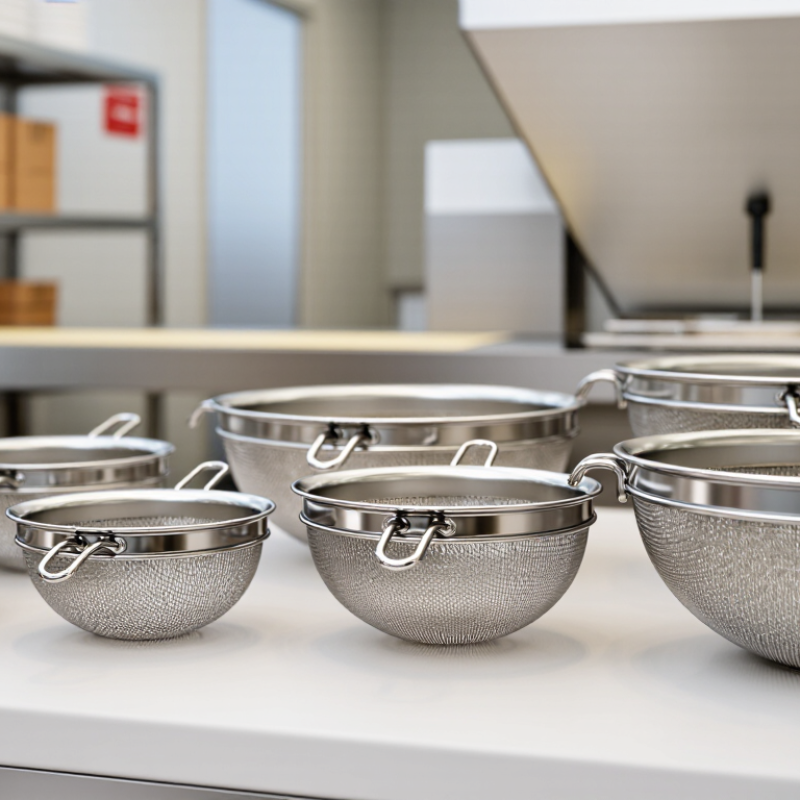
What Food Strainers Are and How They Are Used
A food strainer separates solids from liquids or catches small particles while food drains. Common designs include perforated metal bowls for pasta and vegetables, and fine mesh screens for stock, sauces, tea, or seeds. At home, a cook might rinse spinach under cold water, then shake the basket over the sink. In a commercial kitchen, a larger strainer may drain several kilograms of cooked produce at once. Mesh size matters: coarse holes drain quickly but let fine grains escape. Fine mesh captures more, yet can clog and takes longer to clean.
Strainers support careful handling, but they do not prevent food waste on their own. The UN Environment Programme’s 2024 Food Waste Index Report estimated that 1.05 billion tonnes of food were wasted globally in 2022; households accounted for 60 percent. A strainer can help retain edible pieces when draining broth or rinsing lentils, though storage and portioning matter too.
Small detail.
Choose a stable rim, comfortable handles, and a surface that is easy to inspect for trapped food. The FDA Food Code calls for food-contact surfaces to be durable, smooth, and easily cleanable. In practice, fine mesh can be awkward to clean thoroughly. Check it under good light after use, especially around the rim and handle joints.
Common Food Strainer Types and Materials
Food strainers come in several practical forms. A perforated colander drains pasta or rinsed vegetables quickly, while a fine-mesh strainer catches seeds, grains, and small food particles. A cone-shaped chinois is useful for smoother sauces and stocks. Each design solves a different problem. One strainer rarely does everything well.
Tips: Check the mesh opening, rim, handle, and joins. Ask for sample dimensions and test drainage with the foods you process. A handle that feels secure when empty may wobble under a full load.
Material matters. Stainless steel is commonly chosen for its rigidity, corrosion resistance, and easy cleaning, though thin mesh can dent during rough handling. Food-contact-grade plastic is light and often more affordable, but heat tolerance varies by material. Silicone-coated or silicone strainers fold for storage; inspect their frame and edges for stability. For wholesale orders, confirm material specifications, finish quality, and packaging protection with the supplier. These details sound small. They can affect daily use. I would not assume a polished surface alone proves lasting quality.
Melting temperatures are approximate material ranges, not recommended operating temperatures. Actual heat tolerance depends on the product’s design, construction, and any coatings.
How China’s Food Strainer Manufacturing Industry Works
China’s food strainer manufacturing industry typically turns a product drawing into a sequence of forming, joining, finishing, and inspection steps. Buyers may specify stainless steel, mesh size, basket diameter, handle length, and intended use. These details affect both cost and performance. A fine mesh catches small particles, but it can also slow drainage and become harder to clean.
Factories may cut perforated sheet or woven mesh, then shape it into a bowl, basket, or insert. Handles and rims are attached by welding, riveting, or other suitable methods. Workers deburr sharp edges and polish contact surfaces. Simple checks can reveal uneven rims, loose handles, or blocked mesh openings. Still, inspection methods vary between suppliers, so a sample should be tested under realistic washing and loading conditions.
Tips: Ask for material details, mesh measurements, and a sample. Check welds, edges, and drainage yourself. A polished sample can hide production variation; that risk deserves attention. Share drawings with tolerances, not just photos. Confirm how the factory checks dimensions and surface defects across a production run. Small differences in mesh tension or rim shape may affect fit and daily use.
How Global Buyers Can Evaluate Chinese Manufacturers
Choosing a Chinese food strainer manufacturer starts with working details, not a catalog photo. Ask for mesh opening measurements, wire diameter, rim thickness, and the stated steel grade. Request a sample and inspect its edge, handle alignment, and welds under bright light. Small details matter. A smooth-looking strainer may still trap food around a poorly finished seam.
Ask how the factory checks consistency between samples and production batches. Useful evidence includes inspection records, material documents, and clear explanations of cleaning and finishing processes. Test several units, not just one. Press the handles gently, rinse the strainers, and check for rough edges or loose joints. Claims about durability are less useful without a test method. Even so, a short sample test cannot predict years of kitchen use.
Also assess communication, production capacity, minimum order quantities, lead times, and export packaging. Ask for photos or records from a comparable order, while treating them as supporting evidence rather than proof. If possible, arrange an independent pre-shipment inspection with written acceptance criteria. Compare suppliers on the same specifications. One awkward detail: the cheapest offer can be reasonable, but only when materials, tolerances, and packing are genuinely comparable. A missed question now may become a costly delay later.
Sourcing, Quality Standards, and Export Considerations
For global buyers, sourcing a food strainer means checking the factory process, not just comparing prices. The World Stainless Association reported 58.4 million tonnes of stainless steel production worldwide in 2023, with China contributing about 36.7 million tonnes. That scale supports broad material availability. It does not prove that a finished strainer is food-safe or consistently made. Ask suppliers for material-grade records and batch traceability.
Inspect the details that affect daily use: mesh openings, welded joints, rim smoothness, and handle strength. Request food-contact test reports for the exact material and finish, then confirm that the laboratory and test method are suitable for your destination market. A sample should be checked for sharp wire ends and corrosion after washing. Small defects matter. Still, a sample cannot show how every production batch will perform.
Before ordering, agree on inspection criteria, carton dimensions, labeling, and acceptable defect rates in writing. Verify export documents and tariff classification with a qualified customs professional; requirements can differ by market and product construction. The World Bank’s Logistics Performance Index 2023 ranks China 19th overall, but shipping performance still varies by route and season. Allow time for port delays. I would also ask for a pre-shipment inspection, although its cost may be difficult to justify on small orders.