Welcome to this website!

Choosing the China Best Stackable Containers Manufacturer requires more than comparing catalog prices. Buyers need dependable products, clear specifications, and evidence from real production experience. Stackable Containers should remain stable under repeated loading, warehouse movement, and long-distance shipping. Small design choices matter. A reinforced rim can prevent deformation. A textured base can reduce sliding on metal shelving.
Supply-chain scholar Dr. Hau L. Lee has often emphasized the value of agility: “The best supply chains are not the fastest; they are the most agile.” This principle fits container sourcing well. A reliable manufacturer should adjust dimensions, materials, colors, labeling, and packaging without losing consistency. Buyers should review factory capabilities, sample quality, mold precision, material certifications, and inspection procedures. Photos help. Physical samples help more.
A serious supplier also explains what the product cannot do. That honesty matters. A container rated for light warehouse storage may fail under outdoor exposure or excessive stacking. No design is perfect. Some buyers focus too heavily on unit price and overlook replacement costs, damaged goods, or delayed shipments. That is an expensive lesson.
This guide introduces practical criteria for evaluating Chinese manufacturers. It considers polypropylene strength, load-bearing performance, nesting efficiency, export packaging, customization, quality control, and communication. It also highlights questions buyers should ask before placing an order. Clear answers build trust. Verifiable records build more. With careful evaluation, buyers can select Stackable Containers that support safer storage, smoother handling, and more predictable supply-chain performance.
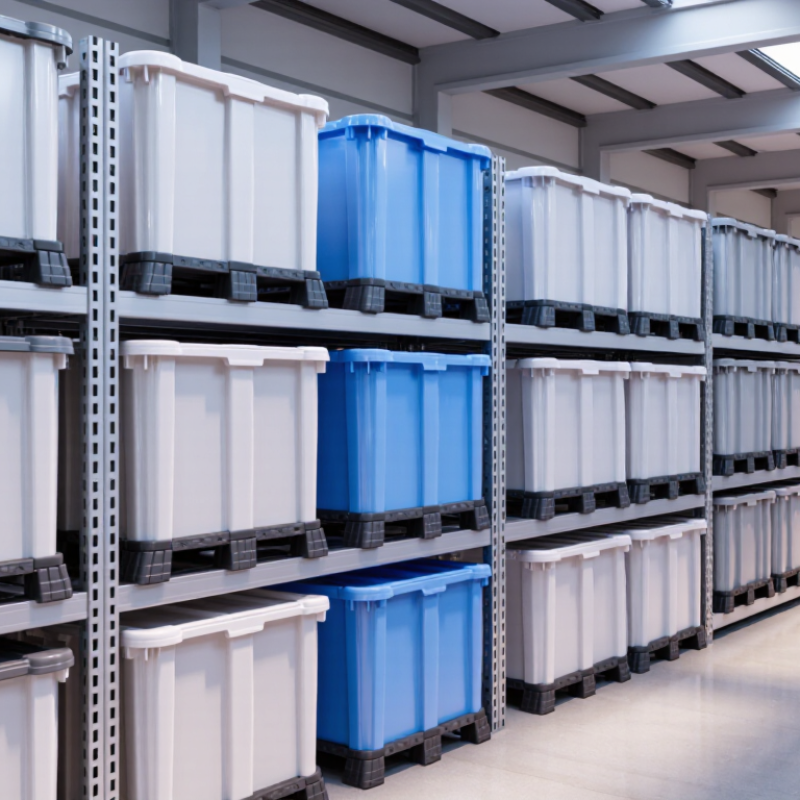
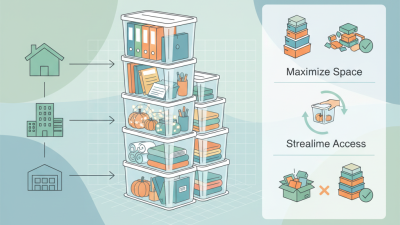
Stackable containers are designed to sit securely above one another. Their reinforced corners transfer weight through the structure, not the stored goods. In production, we check wall thickness, base flatness, rim strength, and dimensional consistency. A container may look strong, yet a slightly warped base can make a tall stack unstable. That detail is easy to miss.
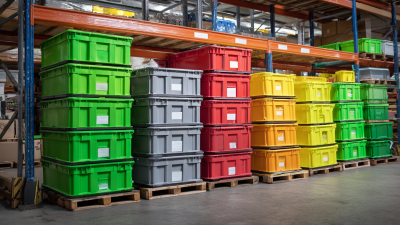
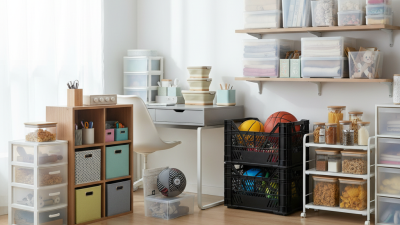
These containers support warehouse storage, factory handling, retail distribution, and component organization. In a busy warehouse, labeled bins can hold fasteners, molded parts, cables, or packaged supplies. Smooth internal walls help workers remove contents quickly. Ventilated versions can improve airflow around selected goods. Heavy-duty models suit repeated movement by hand trucks or suitable material-handling equipment.
Load capacity depends on the material, temperature, stacking height, and handling method. Buyers should request tested data instead of relying on appearance. We recommend checking whether loaded containers remain stable after repeated stacking and transport. Clear identification also matters when workers handle dozens of similar boxes. Small labels help.
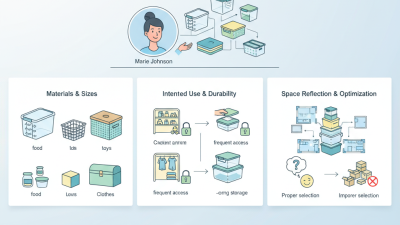
There is no universal container for every application. A large box may waste shelf space, while a small one increases handling time. We sometimes see buyers focus only on unit price. That decision can create higher replacement costs later. A careful trial with real products, shelf dimensions, and expected loads reveals weaknesses before bulk purchasing.
China Best Stackable Containers Manufacturer for Buyers
Choosing a stackable container manufacturer in China requires more than comparing unit prices. Buyers should verify material grades, production experience, and quality controls. Ask for technical data, not vague promises. A reliable factory can explain resin type, wall thickness, load capacity, and temperature limits in clear terms.
Request samples before placing a large order. Inspect corner strength, lid fit, surface finish, and stacking stability. Place filled containers on a level floor for several days. Check for bending or slipping. A manufacturer with professional testing equipment should provide compression and drop-test records. These records must match the actual production model, not a similar sample. That distinction matters.
Production consistency is equally important. Review mold maintenance, incoming material checks, and final inspection procedures. Ask how the factory handles color variation, damaged units, and measurement errors. Clear communication about minimum order quantities, tooling costs, packaging, and delivery schedules reduces surprises. Photos of the workshop help, but an independent audit offers stronger evidence.
Experience has taught many buyers to distrust unusually low quotations. They may hide thinner walls or unstable recycled material. Still, higher prices do not guarantee better containers. I would compare several samples under the same load and storage conditions. Even careful evaluation has limits. Humidity, handling habits, and warehouse floors can change performance. Choose a manufacturer that admits these risks and documents corrective actions.
Chinese manufacturers usually begin with the load, footprint, and storage environment. Engineers measure how containers stack when full, empty, warm, or slightly misaligned. They then select polypropylene or other suitable polymers, balancing impact strength, weight, and cost. Ribbed walls improve stiffness without adding unnecessary material. Reinforced corners protect the container during forklift handling. A perfect-looking crate can still warp.
Production normally starts with mold-flow analysis and trial tooling. Injection molding follows, with controlled temperature, pressure, and cooling time. Workers inspect wall thickness, rim alignment, handles, and stacking feet. Samples may undergo compression testing based on ISO 12048 procedures. Drop tests and repeated stacking trials reveal weak points that drawings often miss. I would not approve a design from drawings alone.
Material efficiency matters. The OECD Global Plastics Outlook reports that global plastic production reached 460 million tonnes in 2019, while only 9% of plastic waste was recycled. This pressure encourages manufacturers to reduce excess resin and design containers for longer service. Some factories also use verified recycled content, but buyers should request batch records and performance results. Traceability is imperfect sometimes. It needs checking. Before ordering, buyers should confirm dimensions, load ratings, mold tolerances, test methods, and inspection frequency. Small errors at the rim can multiply across a warehouse stack.
Quality control begins with measurable details. A reliable manufacturer checks resin quality, wall thickness, dimensions, load strength, and stacking stability. Each production batch should carry traceable records, including inspection dates and operator information. Drop tests and compression tests reveal weaknesses before containers reach a warehouse. Small defects matter.
The OECD Global Plastics Outlook reported 353 million tonnes of plastic waste in 2019. Packaging represented about 40% of global plastic use. This data makes material selection more important for buyers. Recycled-content options, durable designs, and controlled additives can reduce replacement frequency. However, recycled resin may vary in color or impact strength. That limitation needs honest testing.
Certification supports trust, but documents require verification. ISO 9001 quality systems help control production procedures, while ISO 14001 addresses environmental management. The ISO Survey has recorded more than one million ISO 9001 certificates worldwide. For food-contact applications, buyers should request applicable regulatory declarations and migration test reports, not vague claims. Customization may include colors, lids, labels, handles, drainage holes, and carton packaging. Samples should be tested under real stacking conditions. A container that passes an empty-load test may fail when exposed to heat, vibration, or uneven floors. No factory is flawless. Careful buyers still inspect, compare, and question the evidence.
Ordering, Pricing, Logistics, and Supplier Evaluation Steps
Start with a written specification, not a sample photo. Define internal dimensions, load capacity, wall thickness, material grade, lid fit, and stacking height. A 600 × 400 millimeter footprint may suit existing pallets, but confirm it with your warehouse aisles. Request a pre-production sample and a signed inspection standard. I have seen buyers approve clean samples, then receive containers with uneven rims. That assumption can fail.
Pricing should separate tooling, unit cost, packaging, inspection, and inland transport. Ask for quotes at several quantities, such as 500, 2,000, and 10,000 units. Compare cost per usable container, not cost per piece. UNCTAD’s Review of Maritime Transport 2024 reported that global seaborne trade grew 2.4% in 2023 and faced continuing route disruption risks. Freight planning therefore needs buffer time and alternative ports. Small savings can disappear through demurrage, relabeling, or damaged cartons.
Evaluate suppliers through evidence. Check factory capacity, material traceability, quality records, export experience, and corrective-action procedures. Request recent test reports for compression, impact, and temperature performance. The World Bank’s Logistics Performance Index 2023 measures customs, infrastructure, tracking, and timeliness, showing why supplier location alone is not enough. Use a pilot order before committing to annual volume. Keep inspection photos, carton counts, and delivery records. I would also revisit the specification after real warehouse use; a perfect stack on paper may waste space on a moving forklift.