How to Choose the Right Bin Container for Your Needs?
Choosing the right Bin Container begins with a practical question: what will it hold, and where will it sit? A household kitchen, a busy loading dock, and a construction site place very different demands on a container. Capacity matters, but so do access, durability, emptying frequency, and the type of waste. A bin that looks suitable in a product photo may be awkward beside a narrow doorway or too small for a week’s packaging.
Published data shows why those choices deserve attention. The World Bank’s What a Waste 2.0 report (2018) estimated that the world generated 2.01 billion tonnes of municipal solid waste in 2016, with volumes projected to rise substantially by 2050. In the United States, the EPA’s Advancing Sustainable Materials Management: Facts and Figures report (2020) recorded 292.4 million tons of municipal solid waste in 2018—about 4.9 pounds per person per day. These figures cover broad waste streams, not every site or business. Still, they underline how quickly everyday disposal needs can add up.
Good fit matters. For a realistic choice, measure the available footprint, estimate typical waste volume, and check how contents will be lifted or removed. Consider lids, wheels, handles, cleaning, and exposure to weather; a heavy-duty container can still be inconvenient if staff cannot move it safely. There is no universal best option. Even careful estimates miss occasional peaks, so leave room for busy days and changing needs.
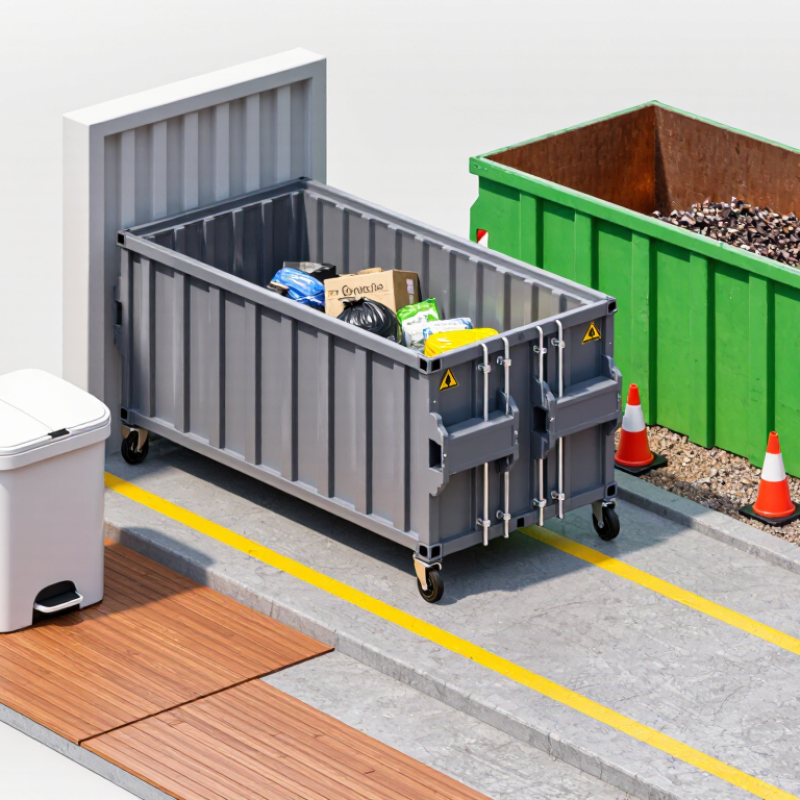
Identify the Waste You Need to Store
Identify the waste before choosing a bin. Food scraps are wet, heavy, and quick to produce odors, so they need a washable container with a secure lid and enough capacity for frequent emptying. The U.S. Environmental Protection Agency reported that food made up 63.1 million tons, or 21.6%, of U.S. municipal solid waste in 2018. That volume makes leak control more than a small convenience. It matters.
Dry paper and cardboard need a different setup. Keep them away from liquids, and choose a bin with enough room to prevent crushing or overflow. The EPA’s 2018 materials report counted 67.4 million tons of paper and paperboard in the waste stream.
For mixed recyclables, separate compartments can help, but only if people use them correctly. A label alone may not be enough; placement and clear sorting instructions matter, too. Check what actually goes into the bin during a normal workday. The plan may look tidy on paper and still fail at the loading area. Match the bin’s material to its contents, consider how it will be cleaned, and leave room for peak-use periods. A little extra capacity can prevent loose waste around the container.
Assess the Required Bin Capacity and Collection Frequency
Start with the waste stream, not the biggest container available. Track how many bags or carts your site fills during a normal week, then note busy days and seasonal peaks. A café may produce little waste on Monday but fill two carts after a weekend rush. Keep a simple log for two or three weeks. It is not perfect, but it beats guessing. Check how tightly materials pack; loose packaging takes space, while wet food scraps can add substantial weight. Capacity is about volume and safe handling, not just appearance.
Next, match capacity to collection frequency. If collections happen twice weekly, estimate the volume produced between visits and leave a modest buffer for delays or unexpected surges. Avoid filling a container to the brim: lids should close, and staff need room to move bags safely. With weekly pickup, a larger bin may reduce service trips, but only if storage space is suitable and the weight remains manageable. Review the setup after the first month. Keep records. Look for overflow, half-empty containers, blocked access, or odor complaints. These signs can point to a mismatch. Holiday schedule changes are easy to overlook, so include them in your estimate.
How to Choose the Right Bin Container for Your Needs? - Assess the Required Bin Capacity and Collection Frequency
Use this guide as a starting point. The right bin size and pickup schedule depend on how much waste you produce, the type of material, available storage space, and local collection arrangements.
| Setting |
Typical Bin Capacity |
Starting Collection Frequency |
Capacity and Schedule Considerations |
| Small household |
120–240 L |
Once weekly |
A 120 L bin may suit a smaller household with limited waste; a 240 L bin provides more room for larger households or where recycling is collected separately. |
| Small office |
120–240 L per waste stream |
Once or twice weekly |
Consider separate capacity for general waste and recyclables. Increase collection frequency if bins regularly fill before pickup day. |
| Busy office or shared workplace |
240–660 L per waste stream |
Two or three times weekly |
Use observed weekly volumes to size bins. Food waste or high staff numbers may require more frequent collection, especially in warm conditions. |
| Café or small food business |
240–660 L |
Daily or several times weekly |
Food scraps can create odours and attract pests. Choose a schedule that avoids overfilled bins and prolonged storage of food waste. |
| Large commercial site |
660–1,100 L |
Several times weekly or daily |
Larger wheeled containers can suit higher-volume sites, provided collection vehicles can access the storage area and the site can safely move the bins. |
| Temporary event |
240–1,100 L, depending on attendance |
During the event and after it ends, as needed |
Place bins near waste-generating areas and check them during busy periods. Plan separate containers where recycling or food-scrap collection is available. |
Planning tip: Track how full each bin is before collection for several weeks. If it is consistently overflowing, add capacity or increase pickups; if it is repeatedly far from full, consider a smaller bin or less frequent collection. Available container sizes and service schedules vary by location.
Compare Bin Types, Materials, and Access Features
Start with the waste stream, not the bin’s appearance. Small details matter. A kitchen, loading dock, and public walkway need different openings and capacities. Open-top bins suit quick disposal, while lidded containers help contain odors and rain. Foot pedals keep hands free; wide openings make bulky waste easier to deposit. Check the route, too: a bin that fits the room may still block a doorway or resist movement when full.
Material choice depends on use. Plastic bins are light and resist moisture, but may crack under repeated impacts. Metal containers can handle rougher settings, though scratches and exposure may lead to corrosion.
The U.S. Environmental Protection Agency reported that Americans generated 292.4 million tons of municipal solid waste in 2018; 69 million tons were recycled and 25 million composted.
That varied waste stream argues for matching container type to what people actually discard, rather than buying one style everywhere. A practical check: test the lid, wheels, and access height with the people who use the bin. I would not treat any material as maintenance-free; even a sturdy container can become awkward when its opening is too small or its wheels clog.
Check Placement, Durability, and Local Requirements
Choosing a bin container starts with its location, not its capacity. Measure the space, then allow room for lids to open and collection crews to move containers safely. Check the route from the storage area to the pickup point: narrow gates, steps, and soft ground can turn a suitable bin into a daily problem. Small details matter. A container placed beside a doorway may block access, while one exposed to strong sun or frequent impacts may wear faster.
Durability depends on what goes inside and how often the bin is moved. Match its construction and wheels to the load, surface, and cleaning routine. The U.S. Environmental Protection Agency’s 2018 Advancing Sustainable Materials Management report estimated that Americans generated 292.4 million tons of municipal solid waste, or about 4.9 pounds per person per day. That scale makes reliable sorting and collection important, but it does not mean every site needs a larger container. Measure twice. A poorly placed oversized bin can be harder to service than a smaller, well-positioned one.
Local requirements also shape the choice. Ask the property manager or municipal waste service about collection schedules, accepted materials, container dimensions, and clearance needs. Rules can differ between neighborhoods and building types, so a general online guide may not settle the question. Keep access points visible, and avoid placing bins where they obstruct walkways or vehicle routes. I would check the site at pickup time, too; a layout that looks clear when empty may become awkward once bins are full.
Plan for Cleaning, Maintenance, and Future Needs
Cleaning and maintenance should shape a bin choice from the start. Check whether staff can remove the liner without lifting a heavy load, reach corners with a brush, and wipe the lid and handles quickly. Smooth, non-porous surfaces and replaceable parts can simplify routine care, but inspect seams and hinges too; grime often gathers where it is hardest to see. Keep a clear path around the container so cleaning does not require moving stacked boxes or blocking a doorway. Small detail, big difference.
Capacity needs change with use. The U.S. EPA’s 2018 Advancing Sustainable Materials Management report estimated that Americans generated 292.4 million tons of municipal solid waste, or about 4.9 pounds per person daily. That national figure is context, not a prediction for your site. Track fill levels and pickup frequency for several weeks, including busy periods, before settling on a size. No forecast is perfect. A practical plan might leave space for a second container, allow wheels to pass through the storage area, or use a removable divider if waste streams change. I would also review the setup after seasonal peaks; the original arrangement may look tidy on paper and still be awkward to clean.