What Is the Best Over The Sink Colander?
Choosing the best Over The Sink Colander is less about appearance and more about daily kitchen performance. A colander must drain quickly, remain stable, and fit the sink without blocking nearby workspace. It should also handle wet vegetables, pasta, berries, and heavier foods without bending or tipping.
Industry data supports this practical focus. Grand View Research estimates that the global kitchenware market continues to expand, driven by home cooking, compact kitchens, and demand for multifunctional products. The International Housewares Association also identifies convenience and space efficiency as important consumer priorities. These trends explain why over-sink designs attract attention. They turn unused sink space into a draining station.
But market growth does not prove quality.
A useful comparison needs more than ratings or attractive product photos. Food-contact materials should be examined carefully, especially stainless steel grades, BPA-free plastics, silicone components, and coating durability. The U.S. Food and Drug Administration provides guidance for food-contact substances, while NSF/ANSI 51 addresses materials used in commercial food equipment. These references cannot certify every household colander, but they offer a reliable evaluation framework.
Real kitchen experience matters too. A wide basket may hold a full serving of pasta, yet fail in a shallow sink. Extendable arms seem flexible, but loose rails can slide under pressure. Small drainage holes improve berry washing, but may slow pasta drainage.
There is no perfect model.
This guide compares capacity, stability, drainage, cleaning effort, sink compatibility, and long-term value. Some conclusions remain subjective. That is worth admitting. The best Over The Sink Colander depends on your sink dimensions, cooking habits, storage limits, and tolerance for small daily inconveniences.
What Is an Over-the-Sink Colander?
What Is an Over-the-Sink Colander?
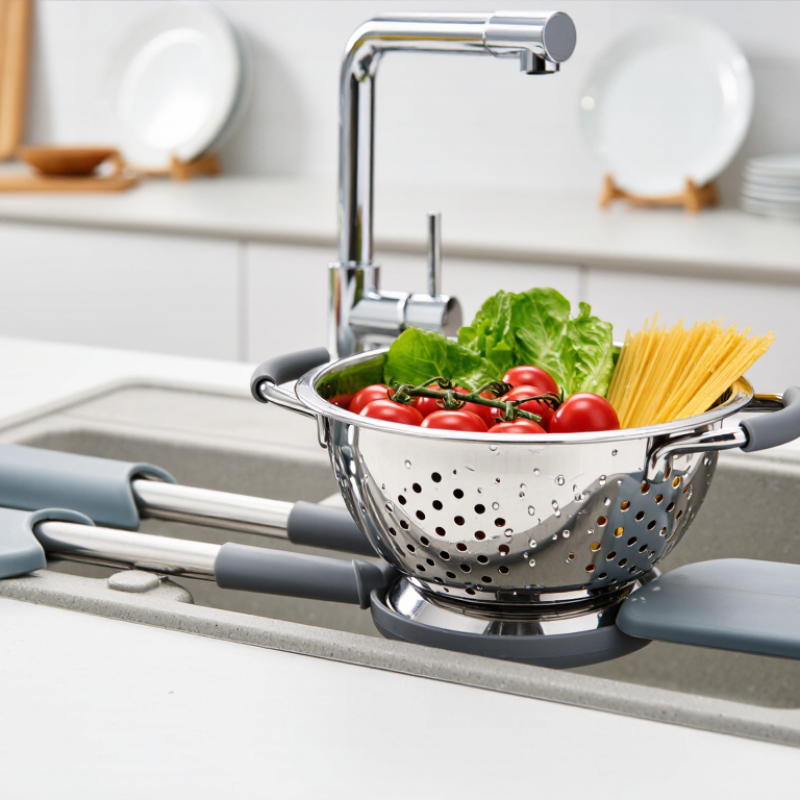
An over-the-sink colander is a perforated basket designed to rest across a sink’s edges. Its handles or adjustable arms keep the basket above the basin. Water drains directly below, while vegetables, pasta, and rinsed dishes remain contained.
This design creates a practical prep station in a small kitchen. You can rinse spinach, drain noodles, or wash berries without occupying the counter. A deep basket helps prevent food from touching the sink surface. That detail matters because the USDA Economic Research Service estimates that 30–40% of the U.S. food supply is lost or wasted. Better draining and easier portion control may reduce avoidable waste, although a colander cannot solve poor storage habits.
Fit is more important than appearance. Measure the sink before buying, including its inner width and rim depth. The basket should sit firmly without sliding when filled with wet potatoes. Stainless steel usually handles heat and repeated washing well. Food-grade plastic is lighter, but it may stain or soften near boiling water. Check the manufacturer’s temperature guidance carefully.
The FDA advises rinsing produce under running water and avoiding soap. A colander supports that process, but it does not replace handwashing or sink cleaning. Small drainage holes can clog with rice or herb leaves. I have found that a quick rinse immediately after use prevents this problem. Still, that habit is easy to neglect. A truly useful colander must be stable, easy to clean, and sized for the sink you actually use.
How Over-the-Sink Colanders Work
An over-the-sink colander uses the sink basin as temporary support.
Its adjustable arms rest on both rims, while perforations let water fall directly into the drain. This design keeps rinsed vegetables above dirty water. It also leaves both hands free for washing, tossing, or trimming food.
The best model should fit your sink securely, even when loaded with pasta or leafy greens.
Measure the basin width before buying. A stable frame matters more than a deep basket. Water should drain quickly, without pooling beneath the food.
The FDA Food Code 2022 recommends food-contact equipment that is smooth, corrosion-resistant, nonabsorbent, and easy to clean. Those details matter around small holes and sliding joints.
Cleaning is part of how these colanders work.
Food particles can hide inside seams, especially after draining rice or chopped herbs.
The CDC estimates that contaminated food causes about 48 million illnesses in the United States each year.
A removable basket helps reduce neglected residue. Do not use soap on fresh produce; USDA guidance recommends rinsing it under running water instead.
One practical weakness remains: an overloaded colander can shift or bend.
I still think stability is often underestimated. Check the arms before pouring boiling water, and leave space for steam to escape.
How to Choose the Right Over-the-Sink Colander
What Is the Best Over The Sink Colander?
How to Choose the Right Over-the-Sink Colander
The best over-the-sink colander should fit your sink before it fits your shopping list. Measure the inner rim, not the countertop. Allow two extra centimeters for stable support. A telescoping frame suits changing sink widths, but sliding parts can collect residue. I still overfill mine sometimes. That mistake makes rinsing uneven and strains the handles.
Choose a bowl that holds your usual portion without touching the faucet. For one or two people, a compact 2–3 liter capacity is often practical. Larger households may need 4–6 liters, especially for leafy vegetables or pasta. USDA ERS estimates that 30–40% of the U.S. food supply is lost or wasted. A correctly sized colander can help you rinse and portion food more carefully, although it cannot solve waste alone. Drain holes should release water quickly without letting small grains escape.
Material deserves careful attention. Stainless steel resists odors and heat, while food-grade plastic usually weighs less. The FDA Food Code requires food-contact surfaces to be smooth, corrosion-resistant, and nonabsorbent. NSF/ANSI 51 also addresses materials used in commercial food equipment. Look for rounded edges, secure handles, and no hidden seams. These details matter during daily cleaning. USDA guidance recommends rinsing produce under running water, not soap. A colander that lifts easily over the sink reduces splashing and makes that routine less awkward. Yet “easy to clean” is subjective; inspect the underside before buying.
How to Use and Maintain an Over-the-Sink Colander
An over-the-sink colander is useful when counter space is limited. Its extendable arms rest across the sink, leaving both hands free. Before using it, check that the arms sit firmly on both sides. The basket should remain level, even when filled with vegetables or pasta. I prefer testing it with a small amount of food first. A poor fit can cause spills, especially in a deep or unusually wide sink.
Place washed produce inside the basket and let water drain completely. For pasta, keep the colander steady and pour slowly to avoid steam burns. Never overload it with heavy, wet food. The weight may shift the basket unexpectedly. I once added too many potatoes and noticed one handle lifting slightly. That mistake changed how I use it. Smaller batches are safer and easier to rinse. Use a soft brush to clean the holes after starchy foods, since dried residue becomes difficult to remove.
Rinse the colander immediately after use. Warm water loosens food particles before they harden. Wash all joints and supporting edges, where moisture can hide. A mild dish soap usually removes grease without damaging the surface. Check the care instructions before using a dishwasher. Some materials can warp, scratch, or lose their finish under high heat. Dry the basket fully before storing it. This reduces odors and limits buildup around seams. Inspect the handles regularly. A small crack deserves attention before the next heavy load.