Top 10 Strainer Bowl Manufacturers for Global Sourcing
Sourcing a reliable Strainer Bowl manufacturer requires more than comparing catalog photos and quoted prices. Buyers must examine material grades, forming methods, mesh accuracy, weld quality, and production consistency. These details affect filtration performance, service life, and maintenance costs in real operating environments. A polished website is not enough.
This guide presents the Top 10 Strainer Bowl Manufacturers for Global Sourcing. The selection focuses on manufacturing experience, technical capability, quality systems, export readiness, and customer support. We consider stainless steel options, custom dimensions, surface finishes, packaging, and inspection procedures. Factory audits, sample testing, and verified production records remain valuable before any purchase decision. Small details matter.
The featured suppliers serve industries such as food processing, chemical production, water treatment, and industrial equipment. Their capabilities may include prototype development, private labeling, bulk production, and compliance documentation. However, no shortlist is flawless. Product ranges change, certifications can expire, and factory performance may vary between projects. Buyers should confirm current evidence directly with each manufacturer. That step is easy to overlook.
Practical sourcing also means checking lead times, minimum order quantities, replacement support, and communication quality. A low unit price may become expensive when tolerances are inconsistent or delivery schedules slip. Experienced purchasers should request drawings, material certificates, inspection reports, and pre-shipment photographs. These records create a clearer basis for comparison. They also reduce avoidable surprises.
This overview is designed to support informed supplier evaluation, not replace technical due diligence. Use it as a starting point. The right Strainer Bowl partner should demonstrate dependable processes, transparent communication, and measurable quality from sample to shipment.
Strainer Bowl Basics and Their Industrial Applications
A strainer bowl is the removable screening chamber inside a pipeline strainer. It captures leaves, scale, weld beads, and other coarse debris before they reach pumps, valves, or heat exchangers. The bowl usually holds a perforated plate or woven mesh basket. Its opening size controls protection and pressure loss. Smaller openings improve capture but require more frequent cleaning. Simple hardware, but easy to underestimate.
Industrial applications are broad. Water treatment plants use strainer bowls before pumps and membrane systems. Food processors use them on wash-water and ingredient lines, where cleanable surfaces matter. Chemical facilities may install them on cooling-water circuits and transfer lines. UNESCO’s United Nations World Water Development Report 2024 states that agriculture represents about 70% of global freshwater withdrawals. That figure strengthens the case for protecting irrigation pumps and reuse systems from suspended solids. The U.S. Environmental Protection Agency’s 2023 Water Reuse Action Plan also identifies industrial process and cooling water as important reuse pathways.
For global sourcing, buyers should check flow rate, design pressure, temperature, corrosion resistance, mesh specification, and gasket compatibility. A bowl that fits dimensionally may still fail during thermal cycling. Maintenance access deserves equal attention. Field teams often prefer hinged covers, lifting handles, and visible differential-pressure indicators. Calculations can look precise, yet real debris loads vary sharply by season. That is where specifications need honest review. A cheaper bowl is not always economical if cleaning stops production.
Strainer Bowl Basics: ASTM E11 Reference Opening Sizes
This chart shows standardized ASTM E11 test-sieve opening sizes that can be used as reference points when specifying screening cuts for industrial strainer bowls. Actual bowl selection depends on fluid viscosity, pressure, temperature, solids loading, and required filtration performance.
Reference values: ASTM E11 nominal test-sieve openings. Industrial strainer bowls may use perforated plate, wire mesh, or wedge-wire elements with different specifications.
Key Criteria for Evaluating Global Strainer Bowl Manufacturers
Top 10 Strainer Bowl Manufacturers for Global Sourcing
Key Criteria for Evaluating Global Strainer Bowl Manufacturers
Selecting a reliable strainer bowl manufacturer requires more than comparing prices. Review production experience, material knowledge, and quality controls. A capable supplier should explain mesh selection, bowl thickness, weld quality, and surface finishing clearly. Ask for recent inspection records, material certificates, and batch traceability. These details reveal how consistently the factory manages production.
Request physical samples before approving large orders. Check the bowl under bright light for uneven perforations, sharp edges, stains, or weak joints. Measure diameter, depth, and wall thickness against approved drawings. In practical sourcing work, packaging often deserves equal attention. Poor protection can create dents before products reach the warehouse. Factory audits, video inspections, and independent testing can strengthen confidence, although none is perfect. A polished catalog is not proof.
Tips: Compare at least three suppliers using the same technical checklist. Confirm minimum order quantities, sample lead times, production capacity, and replacement procedures. Ask whether the stated capacity reflects normal output or an unusually strong month. That question matters. Also examine communication quality. Slow or vague answers may signal future problems, but language differences can create unfair judgments. Give suppliers one clear opportunity to clarify specifications before excluding them.
Profiles of the Top 10 Strainer Bowl Manufacturers
This sourcing guide profiles ten strainer bowl manufacturers by capability, process control, and export readiness. Each profile reflects practical purchasing concerns, not promotional claims.
A precision stamping manufacturer suits standard stainless steel bowls with repeatable holes and smooth edges. A deep-drawing specialist handles thicker metal and stronger curved walls. A fine-perforation producer focuses on uniform openings for filtration accuracy. A laser-cutting workshop offers flexible patterns for smaller production runs. A hygienic fabrication plant provides polished surfaces for food and beverage equipment. A heavy-duty manufacturer builds reinforced bowls for industrial liquid handling. A custom tooling supplier supports unusual diameters, rims, and mounting points. A high-volume factory competes through automated pressing, inspection, and packing. A low-volume specialist helps test new designs before large orders. A contract manufacturer combines forming, welding, finishing, and private-label preparation.
Ask for measurable evidence. Hole diameter tolerance matters. So does rim flatness. Request material certificates, inspection records, and sample photographs under clear lighting. Factory audits should review pressing lines, deburring stations, cleaning areas, and warehouse conditions. Packaging deserves attention because polished bowls can scratch during transit. Some suppliers offer attractive samples but lack stable process control. That risk is easy to miss. Buyers should compare rejected-piece rates, lead-time history, tooling ownership, and communication speed. No profile is perfect; even experienced manufacturers may need clearer drawings or improved inspection methods before production begins.
Global Sourcing Factors for Selecting the Right Manufacturer
Global sourcing starts with evidence, not attractive catalog photos. Compare each manufacturer’s strainer bowl materials, mesh openings, wall thickness, and surface finish. Request recent inspection records, dimensional reports, and batch traceability documents. A reliable supplier should explain how operators control welding, polishing, and edge consistency. Ask for samples from normal production, not specially prepared pieces. Samples reveal reality.
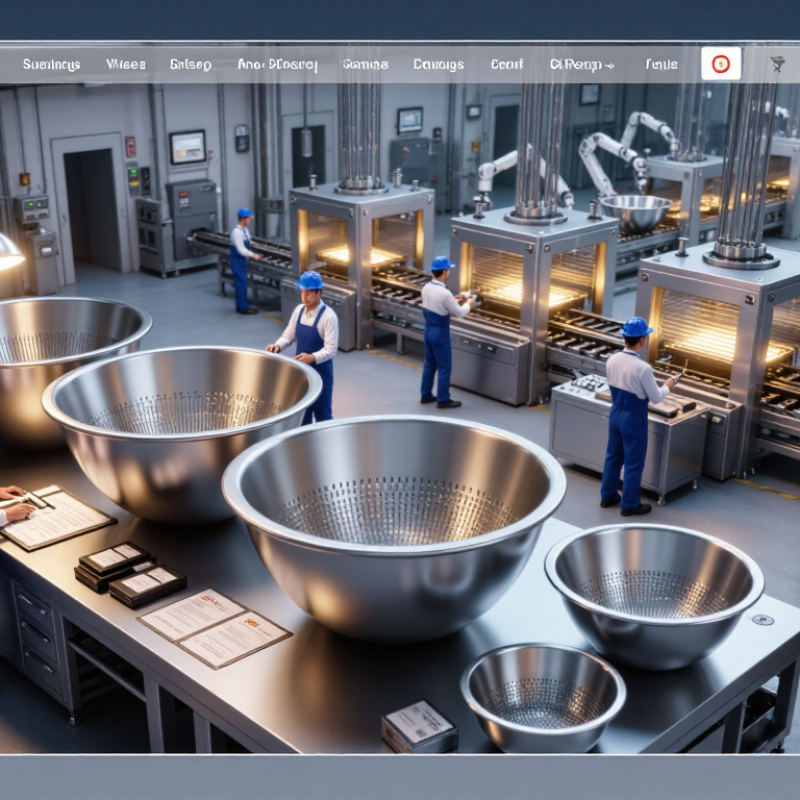
Factory experience matters when designs include unusual diameters, fine perforations, or reinforced rims. Review production equipment, daily capacity, tooling ownership, and quality checkpoints. A useful audit should include the raw material area, forming line, washing process, and packing station. Photograph details during the visit. Small gaps matter. Check whether measurements match the approved drawing.
Global delivery adds different risks. Confirm packaging strength, carton labeling, lead times, spare tooling, and communication hours. Request a clear response process for damaged goods or dimensional deviations. Technical staff should understand your drawings, tolerances, and intended operating conditions. Price alone can hide rework, delays, or unstable quality. Our early shortlist once favored the lowest quotation, but inconsistent rim flatness caused assembly problems. That mistake changed our evaluation method. We now compare total landed cost, inspection effort, production flexibility, and corrective-action speed. A manufacturer that admits limitations may prove more dependable than one promising everything. Reliability grows through documented actions, not confident wording.