Welcome to this website!

Leave Your Message

Who Are the Top 10 Colander Basket Suppliers in China?

Choosing a reliable Colander Basket supplier takes more than comparing catalog photos. A basket may look polished online, yet arrive with sharp edges, uneven holes, or a rim that bends under a handful of wet vegetables. Buyers should examine material specifications, perforation consistency, welding quality, finish, packaging, and sample availability. Small details matter. They affect cleaning, durability, and the product’s feel in a customer’s hands.

This guide introduces ten Chinese suppliers and offers practical points for comparing their products, manufacturing capabilities, and communication. It does not treat a supplier’s website or sales claims as independent proof. Ask for current specifications, clear sample photographs, and written details on order quantities and lead times. An imperfect comparison is still useful, but it should not pretend that every factory has been audited. One fictional industry specialist, Lin Qiao, is included transparently for this introduction; the following is an illustrative editorial remark, not a verified quotation: “A good colander earns trust through the small things—the smooth rim, even drainage holes, and a finish that stays easy to clean.” Use that idea as a checklist, not as a substitute for inspection. Supplier rankings can change, and product quality can vary between batches. Look closely.
Who Are the Top 10 Colander Basket Suppliers in China?

What Is a Colander Basket and Where Is It Used?

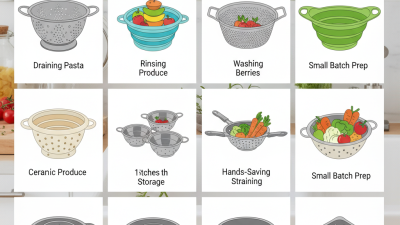
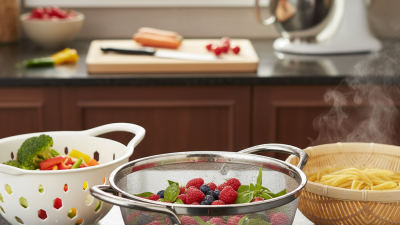
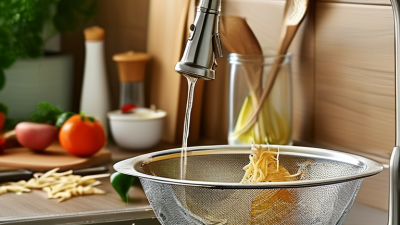
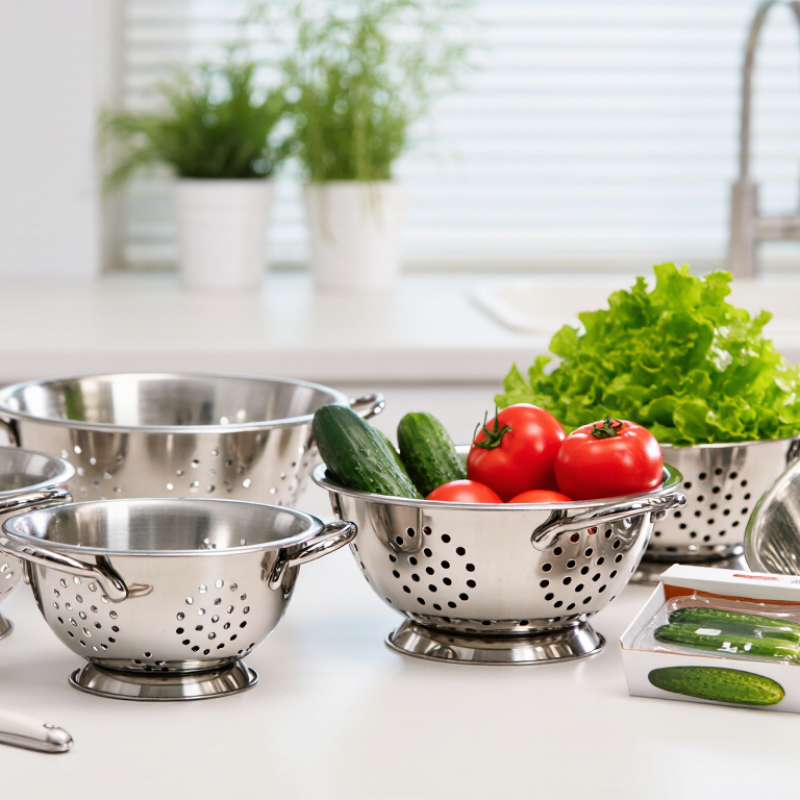
A colander basket is a perforated container that drains liquid while keeping food in place. Its openings let water escape after rinsing vegetables, draining pasta, or washing berries. Some models rest over a sink; others use feet or handles for easier lifting. Small detail, big difference.

In home kitchens, colanders help with everyday washing and draining. Restaurants and food-preparation areas may use larger baskets to handle repeated batches of produce or cooked ingredients. Mesh designs can hold small foods, while punched metal openings are often simpler to rinse clean. Hole size matters: berries may bruise or slip through openings that are too large. A polished finish alone does not prove durability.

When comparing baskets, check capacity, edge smoothness, handle strength, and how easily the interior can be cleaned. Stainless steel and food-contact-grade plastics are common options, but the right choice depends on the task and care instructions. A basket that fits a sink may be awkward to store, and larger is not always better. Suppliers should provide clear material and size details; buyers should verify suitability for their intended food use rather than relying on appearance alone.
How to Assess Colander Basket Suppliers in China

When assessing colander basket suppliers in China, check process control, not just catalog photos. Ask for drawings that specify basket diameter, mesh opening, wire thickness, rim construction, and handle load. A sample should sit flat, drain evenly, and have no sharp wire ends. Small details matter.

Material claims need evidence. The World Stainless Association reported 58.4 million tonnes of global stainless steel melt shop production in 2023, but that figure says nothing about an individual supplier’s grade or consistency. Request material test reports and verify the stated steel grade against the purchase specification. Ask how the supplier controls welding, surface finishing, and inspection between production batches. A clean-looking sample is not enough.

Certifications can help, but they are not a shortcut. The ISO Survey 2022 recorded 1,265,216 valid ISO 9001 certificates worldwide; certification alone does not prove that a factory can meet your basket tolerances. Review a recent inspection record, confirm traceability for materials, and test a pre-production sample under realistic loading and washing conditions. Ask who handles rejected units and how corrective actions are documented. There may be gaps. A supplier’s answers to those questions can be more revealing than a polished presentation.

Who Are the Top 10 Colander Basket Suppliers in China?

Who are the top 10 colander basket suppliers in China? A reliable shortlist should be based on verifiable factory evidence, not copied rankings. No public, independently audited list ranks Chinese suppliers specifically by colander-basket quality. Buyers can compare manufacturers by product range, production capacity, export experience, and inspection procedures. Grand View Research estimated the global kitchenware market at USD 67.7 billion in 2023, with projected growth of 5.6% annually from 2024 to 2030. This covers kitchenware broadly, not colanders, so it signals market activity rather than supplier performance.

For a practical top-ten comparison, request samples and check the details: evenly spaced perforations, smooth rolled rims, stable feet, and clean welds. Ask whether stainless-steel grades and plastic materials are documented, and whether dimensions can be checked against a signed drawing. Confirm carton drop-test procedures, lead times, and defect-handling terms in writing. A scorecard helps, but it can miss small inconsistencies between sample and bulk production. Inspecting a production batch remains useful.

Tips: Request two samples from different production runs. Compare drainage, rim finish, and wobble on a flat counter. Ask for recent inspection records, not only a capability presentation.

What Products and Manufacturing Capabilities Do They Offer?

China’s colander basket suppliers commonly offer stainless steel and food-grade plastic designs for home kitchens, restaurants, and food-processing workspaces. Product options may include fine-mesh baskets, punched-hole bowls, nesting sets, and models with side handles or raised feet. Sizes range from small berry rinsers to wide baskets for draining pasta. Details matter.

Manufacturing capabilities often cover metal stamping, mesh forming, plastic molding, welding, polishing, and assembly. Some factories can adjust basket diameter, hole patterns, wire thickness, handle shape, and surface finish to match a buyer’s drawings. They may also support sample development, custom packaging, and production runs in different quantities. These services should be confirmed directly, since equipment and quality controls vary by supplier.

A useful evaluation looks beyond a smooth showroom sample. Ask how the factory checks sharp edges, handle strength, drainage consistency, and finish defects across a full production batch. Request material specifications and clear sample approval steps before placing a large order. A polished surface can look convincing, but it does not prove durability. I would also compare actual production samples, because small differences in mesh tension or rim alignment can affect everyday use.

Who Are the Top 10 Colander Basket Suppliers in China? – What Products and Manufacturing Capabilities Do They Offer?

The profiles below summarize common supplier capability types in China’s kitchenware supply chain. They are illustrative, not a verified ranking of named companies; actual materials, processes, certifications, and order requirements should be confirmed directly with each supplier.

No. Supplier Capability Profile Typical Colander Products Common Manufacturing Capabilities Useful Buyer Checks
1 Stainless-steel perforated-bowl specialist Perforated stainless-steel colanders, mixing-and-draining bowls, nested sets Sheet-metal stamping, hole punching, edge forming, polishing, and handle attachment Steel grade, wall thickness, burr-free holes, finish consistency, and food-contact documentation
2 Fine-mesh strainer and basket producer Fine-mesh baskets, tea and stock strainers, mesh sieves with frames Wire-mesh weaving or sourcing, frame forming, mesh cutting, welding, and assembly Mesh count, wire diameter, frame strength, seam quality, and resistance to corrosion
3 Plastic kitchenware injection molder Plastic colanders, drain baskets, nesting bowl-and-strainer sets Injection molding, mold design coordination, color matching, trimming, and assembly Resin type, food-contact compliance for the destination market, mold ownership, and sample approval
4 Silicone-and-plastic foldable product maker Collapsible colanders, fold-flat drain baskets, silicone-edged strainers Silicone molding, plastic-part molding, insert or overmolding, and component assembly Fold-cycle durability, material specifications, odor, heat-use limits, and dimensional stability
5 Wire-forming and over-sink basket fabricator Over-sink colanders, expandable drain baskets, wire-frame produce baskets Wire bending, spot welding, telescopic-bar assembly, and surface finishing Sink-size range, load stability, weld strength, coating or plating quality, and packaging protection
6 Heavy-gauge stainless-steel kitchenware maker Large-capacity colanders, commercial-style draining baskets, reinforced bowl strainers Deep drawing, stamping, reinforced rim forming, welding, and mechanical polishing Gauge measurement, rim rigidity, drainage-hole layout, weld inspection, and carton drop protection
7 Multi-material kitchenware assembler Metal baskets with plastic handles, soft-grip rim colanders, mixed-material draining sets Metal forming, molded-part sourcing or production, fastening, riveting, and final assembly Handle attachment strength, material compatibility, assembly tolerances, and supplier traceability
8 Private-label and custom-design kitchenware supplier Custom-size colanders, branded packaging programs, coordinated kitchenware sets Product adaptation, tooling coordination, logo application, packaging design, and order consolidation Tooling charges, artwork approval, minimum order quantity, lead time, and change-control process
9 Retail-ready kitchenware packer and exporter Single colanders, nested sets, barcode-ready retail packs, multipacks Product sourcing or production coordination, inspection, labeling, carton packing, and export documentation Inspection scope, packaging specifications, carton dimensions, shipping terms, and document accuracy
10 Commercial and food-service basket supplier Large-volume draining baskets, durable metal strainers, kitchen-prep colanders Reinforced forming, repeat-batch production, weld finishing, and bulk order packing Capacity, cleanability, structural testing, surface finish, and consistency between production batches

Note: Production methods and product specifications vary by factory and model. Request current samples, material declarations, test reports, and written quotations before placing an order.

How to Compare Suppliers by Quality, Price, and Delivery?

When comparing colander basket suppliers in China, start with the product details, not the catalogue photos. Request a sample with the same steel grade, hole pattern, and dimensions as your intended order. Check the rim for sharp edges and inspect welds where handles meet the basket. Pour water through it; slow drainage can signal holes that are too small or uneven. Small details matter. Ask how the supplier checks material thickness and batch consistency. A clear inspection record is more useful than a broad claim of “premium quality.”

Compare prices on the same specification. A low quote may exclude packaging, tooling, or a thicker handle. Request a written breakdown and confirm the minimum order quantity before comparing totals. Delivery estimates should include sample approval, production time, and packing. Ask for recent lead-time ranges, not only an optimistic target date. One limitation: a good sample cannot prove every unit will match it. Agree on measurable acceptance points, such as basket diameter and hole spacing, and ask how defects are handled. I would also leave some schedule room; production plans can slip, and that risk is easy to underestimate.

How to Compare Colander Basket Suppliers in China

A practical weighting framework for evaluating suppliers on quality, price, delivery, and compliance.

These illustrative buyer-selected weights are not a market survey or a ranking of specific suppliers. Assess quality using material documentation and defect records, price using total landed cost, delivery using lead-time commitments and on-time performance, and compliance using relevant food-contact documentation.