Welcome to this website!

Leave Your Message

Top 10 Storage Container Manufacturers in China

China’s storage container industry serves a market shaped by trade, logistics, construction, and demand for flexible space. UNCTAD’s Review of Maritime Transport 2024 reports that global container port throughput reached 858.2 million TEUs in 2023, up 2.3% from 2022. This figure does not measure storage-container sales, but it shows the scale of the wider container ecosystem. Storage Containers may be used for equipment, inventory, temporary workspaces, or transport-linked storage. Their real value depends on fit, not just size.

A manufacturer comparison should look beyond attractive product photos. Buyers can check steel grade, weld quality, door seals, ventilation, coatings, load ratings, customization options, and documented quality controls. ISO 668 provides standardized classifications and dimensions for Series 1 freight containers; buyers should still confirm that a specific product meets their intended use. Details matter. A stiff door on uneven ground, for example, can turn daily access into a real nuisance.

The companies in this guide are assessed through practical criteria, including product range, manufacturing capability, customization, export experience, and after-sales support. Public information varies, and marketing claims are not the same as independent verification. That is worth remembering. A supplier with a broad catalog may not be the best choice for a small site, while a lower quote may exclude delivery or installation. The following Top 10 list offers a starting point for comparing China-based manufacturers, not a substitute for checking specifications, samples, and project requirements.
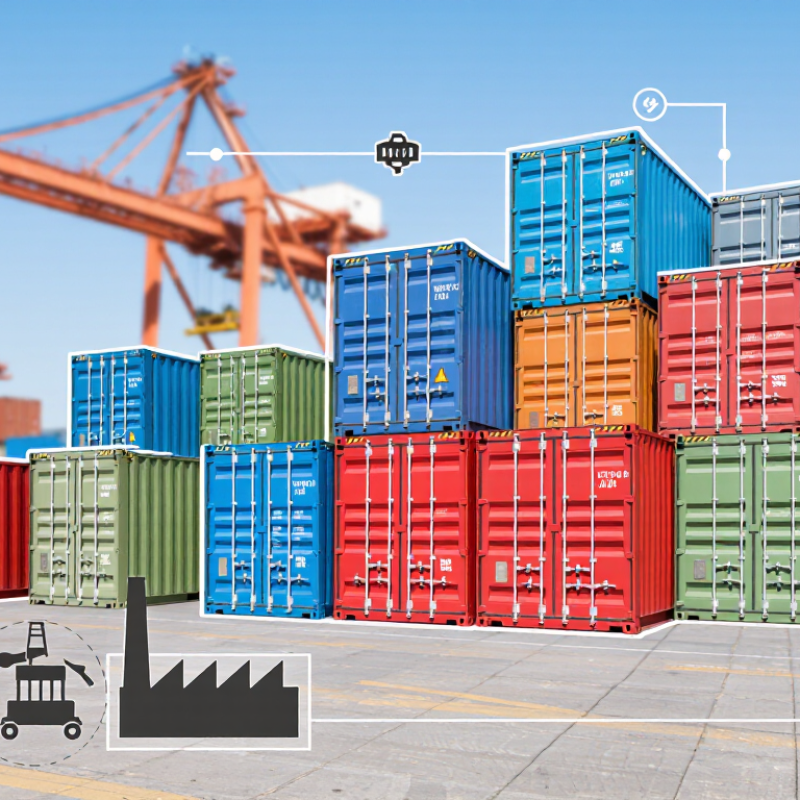
Top 10 Storage Container Manufacturers in China

How China’s Storage Container Manufacturing Industry Is Organized

China’s storage-container manufacturing industry is not built around one factory model. It works through a layered supply chain. Steel service centers provide cut-to-size plate, while component workshops make corner fittings, hinges, locking bars, and floor supports. Container plants weld frames, fit wall panels, install floors, and apply protective coatings. Some specialize in standard dry-storage units; others build insulated, open-side, or project-specific containers. The distinction matters. Buyers should ask which production steps happen in-house and which are subcontracted. That detail can affect both lead time and consistency.

Manufacturers range from large integrated exporters to smaller contract workshops serving regional demand. Many operate near ports and industrial hubs, where steel, transport links, and export services are easier to access. Location alone proves little. A reliable assessment looks for material specifications, weld-inspection records, coating-thickness checks, and trial-assembly evidence. A few millimeters can complicate door alignment or stacking. In practice, quality often depends on routine habits, not impressive machinery. A clean weld is useful. So is a traceable batch record. This industry map is helpful, but imperfect: subcontracting arrangements can change from one order to another, and buyers may underestimate how custom openings, flooring, or paint requirements affect schedules.


Top 10 Storage Container Manufacturers in China

How China’s Storage Container Manufacturing Industry Is Organized

China’s container manufacturing industry produces standardized units in multiple sizes. These nominal ISO external dimensions show how a 40-foot high-cube container keeps the standard 40-foot length and width while adding height. Actual specifications may vary within permitted tolerances.

Criteria for Identifying Leading Chinese Storage Container Manufacturers

Choosing a leading Chinese storage-container manufacturer takes more than comparing prices or factory size. UNCTAD’s Review of Maritime Transport 2024 reports that global container-port throughput reached 858.9 million TEUs in 2023, up 2.4% year on year. This scale makes durability and dependable delivery important selection criteria. That scale matters. Buyers should check steel specifications, weld quality, corrosion protection, and whether production records can be traced to individual units.

For containers intended for freight service, request evidence of testing against relevant requirements in ISO 1496-1, including structural and load-related checks. For general storage units, confirm the design’s stated payload, floor capacity, door operation, and coating system instead of assuming freight-container specifications apply. Ask for recent inspection records and clear acceptance criteria.

A painted sample can look convincing. It tells little about hidden weld defects or coating thickness.

Assess quality control across multiple production batches, not just a showroom unit. Request documented defect rates, inspection procedures, delivery performance, and available replacement parts. UNCTAD’s figures describe port activity, not storage-container demand, so they should inform context rather than prove a supplier’s market position. A factory tour alone proves little. Independent sample inspection can reveal gaps, though it adds time and cost. Compare quotations only after matching specifications, test scope, packaging, and lead times.

Profiles of Ten Notable Storage Container Manufacturers in China

China’s storage-container sector includes manufacturers with different strengths. One focuses on standard steel units for warehouse overflow. Another builds modular containers for temporary workspaces. A third specializes in insulated models, where panel fit and door seals matter. Small details count. A fourth offers flat-pack designs that reduce shipping volume. A fifth makes heavy-duty units for industrial sites, with reinforced floors and lifting points.

Other profiles highlight customization. One manufacturer adapts dimensions for tight loading areas; another produces containers with shelving, partitions, or access windows. A larger exporter may coordinate fabrication, inspection, and shipment, while a smaller workshop may offer closer design communication. A specialist in weather-resistant coatings can be relevant for outdoor storage, though coating quality depends on preparation as well as paint. These are useful distinctions, not automatic proof of quality.

When comparing manufacturers, buyers can ask for material specifications, weld inspection records, finish details, and photos of completed units. Requesting a sample drawing can expose unclear dimensions early. Not glamorous, but practical. Lead times, packing methods, and after-sales support also deserve scrutiny. Company profiles provide a starting point, yet published details may be incomplete or change over time. Verify claims directly, and compare the same requirements across suppliers.

Products, Production Capabilities, and Quality Standards

Storage container manufacturers in China vary in the products they make and the production systems behind them. Common options include dry freight, refrigerated, open-top, and flat-rack containers. A capable factory should explain which designs it builds in-house and which components it sources. Ask for drawings, material specifications, and sample inspection records.

Production capacity is more than a large workshop. Look for organized cutting, forming, welding, coating, and assembly areas, with documented checks between stages. For example, inspectors may measure door openings, examine weld seams, and test seals against water entry. Refrigerated units need additional checks on insulation and temperature performance. These details matter. A stated monthly output alone tells little about delivery consistency or customization limits.

Quality standards should be supported by traceable evidence, not just a polished brochure. Request records for steel grades, coating thickness, dimensional tolerances, and final inspections. Independent testing can help confirm claims, especially for units intended for demanding routes or repeated handling. Compare the actual test scope with your requirements; a certificate may cover only one model or production batch. Even a careful review has limits, since factory conditions can change between visits. Ask how defects are recorded and corrected, and whether production samples match the approved specification.

Top 10 Storage Container Manufacturers in China - Products, Production Capabilities, and Quality Standards Anonymized supplier-screening comparison by manufacturing focus; entries are capability profiles, not named or ranked company claims.
No. Manufacturing Focus Typical Products Production Capabilities to Verify Relevant Quality Standards and Checks
1 Dry freight steel containers General-purpose enclosed containers for cargo and storage Corrugated steel-panel forming, frame fabrication, welding, door assembly, surface preparation, and coating For freight containers, verify applicable ISO 668 dimensions and ratings, ISO 1496-1 test requirements, and CSC safety approval where required. Inspect welds, door operation, and coating coverage.
2 Open-top and removable-roof containers Containers designed for top loading of tall or bulky cargo Roof-bow and cover fabrication, reinforced top rails, corner fitting assembly, and weather-resistant door construction Check the applicable ISO 1496 series requirements and CSC approval for freight use. Verify structural condition, cover fit, lashing points, and water-ingress performance.
3 Flat-rack and platform containers Collapsible or fixed-end units for oversized cargo Heavy-section steel fabrication, precision alignment, reinforced end structures, and load-securing feature installation Confirm applicable ISO dimensional and testing requirements, CSC approval where applicable, and documented load ratings. Review weld inspection records and proof-test documentation.
4 Side-opening containers Storage and freight units with wide side access Multi-door frame assembly, hinge and locking-system fitting, panel alignment, and corrosion-protection application Check door-cycle operation, locking engagement, frame squareness, and water-ingress control. For freight units, verify applicable ISO 1496 requirements and CSC status.
5 Insulated and temperature-controlled units Insulated storage containers and refrigerated freight units Insulated panel assembly, thermal-break detailing, gasket fitting, and, for powered units, refrigeration-system installation and testing Request thermal-performance and leak-test records. Refrigerated freight units should be checked against applicable ISO 1496-2 requirements; verify electrical safety and temperature-control functions for the specified configuration.
6 Liquid tank containers Tank containers for specified liquid cargoes Pressure-vessel fabrication, tank-to-frame integration, valve and fitting installation, and pressure and leak testing Requirements depend on cargo and transport mode. Verify applicable pressure-vessel, dangerous-goods, and tank-container approvals, plus material certificates and test records; do not assume dry-container standards cover tank compliance.
7 Modified and modular steel containers Workshop, site-storage, office, and modular building units Cut-outs and reinforcement, insulation and lining installation, electrical fit-out, and modular joining or stacking preparation Check structural drawings, weld quality, fire and electrical compliance applicable to the destination, and documented approval for modifications that may affect freight-container certification.
8 Plastic storage containers Reusable bins, totes, boxes, and bulk storage containers Injection or blow molding, mold maintenance, material control, and dimensional inspection Verify material specifications, load and stacking tests, dimensional tolerances, and food-contact compliance when the product is intended for food use. Requirements vary by resin and destination market.
9 Stainless-steel process and storage vessels Sanitary tanks and vessels for food, beverage, or industrial processes Sheet and plate forming, stainless-steel welding, surface finishing, and cleaning or passivation processes where specified Check material traceability, weld procedures and inspection records, surface-finish requirements, and applicable pressure-vessel or sanitary rules for the intended service.
10 Special-purpose and custom containers Project-specific storage units with custom dimensions, access, or fittings Design engineering, prototype fabrication, custom tooling or fixtures, and inspection against approved drawings Agree on a project-specific inspection and test plan. Verify material certificates, dimensional reports, weld inspection, coating records, and any destination-specific approvals before production.

How to Compare Suppliers for Different Storage Needs

Comparing storage-container suppliers starts with the job the container must do. A dry warehouse, a chilled room, and an outdoor yard place very different demands on materials, lids, and stacking strength. Ask for usable internal dimensions, rated load, empty weight, and temperature limits—not just external size. For plastic units, request material specifications and test results; for metal units, check coating thickness, weld quality, and corrosion protection. A sample filled with your actual goods can reveal awkward handling or wasted space.

MHI’s 2024 Annual Industry Report found that 55% of surveyed supply-chain professionals planned to increase technology investment. That figure does not measure container demand, but it highlights a practical check: confirm that containers fit existing racks, conveyors, and tracking systems. Request drawings and a documented load test. Compare quotations on the same specification, including packaging, lead time, spare parts, and inspection terms. A low unit price can hide costly incompatibility. I’d also verify claims with a pre-shipment inspection; paperwork alone is not enough.

Tips: Send suppliers one clear checklist and photos of your storage area. Test a sample under real conditions. Small details matter. A lid that catches on a shelf can slow a whole shift.