Welcome to this website!

Choosing the top Glass Containers suppliers requires more than comparing production volume. Buyers must examine quality systems, furnace efficiency, recycled-content capacity, design support, and delivery reliability. A clear bottle may look simple, yet its performance depends on wall thickness, closure fit, thermal resistance, and defect control.
Recent industry research shows why this market deserves careful evaluation. Grand View Research estimates that the global glass packaging market reached approximately USD 55.6 billion in 2023. Its report also expects continued growth through 2030, driven by food, beverage, pharmaceutical, and cosmetic applications. Smithers’ “The Future of Glass Packaging to 2028” highlights lightweighting, sustainability, and advanced manufacturing as major competitive forces. These reports do not identify one universal winner. Regional capacity and customer requirements still matter greatly.
FEVE, the European Container Glass Federation, emphasizes the material’s long-term value. Adeline Farrelly, FEVE Secretary General, has stated, “Glass is a permanent material: it can be recycled endlessly without loss in quality.” That principle influences supplier selection, but it does not solve every purchasing problem. Some suppliers offer strong recycled-glass programs, while others provide better customization, shorter lead times, or stronger pharmaceutical compliance. No ranking is perfect.
This guide compares leading Glass Containers suppliers through practical criteria, including global reach, manufacturing technology, product range, sustainability performance, and service reliability. The strongest supplier may not be the largest one. It may be the partner that delivers consistent amber bottles, stable dimensions, and dependable shipments when the production line is already waiting.
What Are the Top Glass Container Suppliers?
Glass Containers: Types, Uses, and Key Market Segments
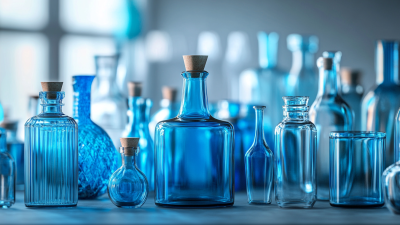
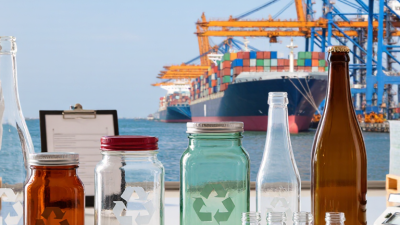
Top glass container suppliers are usually judged by technical consistency, not catalog size. They produce bottles, jars, vials, and specialty containers with controlled wall thickness and reliable neck dimensions. Clear glass supports product visibility. Amber and green glass provide stronger light protection. Borosilicate glass suits applications requiring thermal resistance.
The main uses span food, beverages, cosmetics, pharmaceuticals, and household products. Grand View Research valued the global glass packaging market at approximately USD 82.9 billion in 2023. Its analysis also projects continued growth through 2030, supported by demand for recyclable packaging. Yet market forecasts differ by research method. That uncertainty deserves attention.
Food and beverage containers remain major volume segments, while pharmaceutical packaging demands tighter inspection and lower defect rates. Smithers identifies sustainability, lightweighting, and premium presentation as important market drivers. FEVE reports that glass packaging recycling rates in Europe have exceeded 80% in recent years. That figure is encouraging, but collection systems vary widely by country.
A capable supplier should provide dimensional testing, batch traceability, mold flexibility, and documented quality controls. It should also explain recycled-content limits honestly. Lightweight glass can reduce transport emissions, but thinner walls may increase breakage risks. The best choice depends on filling temperature, closure design, shipping distance, and expected shelf life. Procurement teams sometimes overlook those practical details.
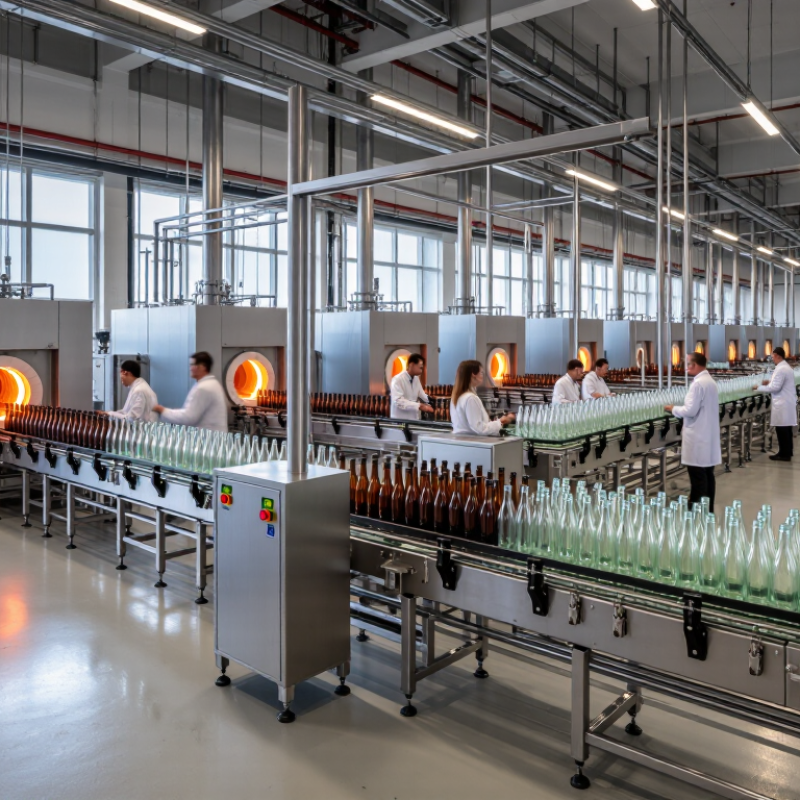
Top glass container suppliers do more than melt sand. They control a precise, repeatable manufacturing chain. The process begins with silica sand, soda ash, limestone, colorants, and recycled glass called cullet. Cullet lowers melting demand and supports consistent quality. According to FEVE’s 2023 industry statistics, European container-glass production exceeds 22 million tonnes annually. That scale requires disciplined material testing.
Inside the furnace, the batch reaches roughly 1,500°C. Molten glass then flows through narrow channels toward forming machines. Individual gobs are cut by weight and dropped into molds. Compressed air shapes each container within seconds. Annealing ovens remove internal stress gradually. Without this stage, a bottle may crack during filling or transport. The International Energy Agency identifies high-temperature melting as a major energy challenge for glass production. Suppliers therefore improve furnace insulation, heat recovery, and electric boosting. Small process changes matter.
Quality teams inspect thickness, dimensions, color, pressure resistance, and surface defects. Automated cameras catch marks that human inspectors may miss. Operators still review unusual results. That human judgment remains useful. No production line is perfectly efficient, however. Recycled glass can vary in color, moisture, and contamination. A reliable supplier documents these variations instead of hiding them. FEVE also reports that recycled glass is a significant part of European container production, although the exact share differs by market and product type. Buyers should examine audit records, testing methods, furnace performance, and traceability before choosing a supplier. Cost alone tells an incomplete story.
| Manufacturing or Supplier Dimension | Typical Industry Data | How the Product Is Made | Importance for Buyers |
|---|---|---|---|
| Primary Glass Material | Soda-lime-silica glass is the standard material for most food, beverage, pharmaceutical, and cosmetic containers. | Silica sand, soda ash, limestone, and recycled glass cullet are precisely batched and melted together. | The material offers chemical stability, transparency, strength, and compatibility with high-speed filling lines. |
| Recycled Glass Content | Container-glass furnaces commonly use a blend of virgin raw materials and recycled cullet; the exact percentage depends on color, quality, and local collection systems. | Collected glass is sorted by color, cleaned, crushed, and screened before being mixed into the furnace batch. | Using cullet reduces raw-material demand and can lower furnace energy consumption because it melts more readily than virgin minerals. |
| Melting Process | Soda-lime container glass is typically melted at approximately 1,400–1,600°C, depending on the formulation and furnace design. | The batch is continuously fed into a regenerative or oxy-fuel furnace, where it is melted, refined, and homogenized. | Stable temperature control helps prevent bubbles, stones, cords, and variations in color or wall thickness. |
| Forming Technology | The two main methods for narrow- and wide-mouth containers are blow-and-blow and press-and-blow forming. | A measured molten-glass gob is cut, delivered into a blank mold, and shaped by compressed air and/or a mechanical plunger before final molding. | The selected process influences neck accuracy, weight distribution, production speed, and the container’s resistance to impact. |
| Container Colors | Clear, amber, green, and other controlled colors are produced by adjusting the glass formulation with small quantities of colorant minerals. | Colorants are added to the batch and thoroughly mixed before melting; optical inspection checks consistency during production. | Amber glass provides strong protection from ultraviolet light, while clear glass improves product visibility. |
| Annealing Treatment | Soda-lime containers are commonly annealed near the glass transition range, with the annealing point typically around 510–550°C. | Freshly formed containers pass through a temperature-controlled annealing lehr that gradually removes internal thermal stress. | Proper annealing reduces the risk of cracking during filling, transportation, washing, and consumer use. |
| Surface Treatment | Hot-end and cold-end coatings may be applied to improve scratch resistance and reduce friction during handling. | A thin coating is applied after forming or annealing, followed by controlled cooling and inspection. | Surface treatment helps minimize scuffing, line jams, and container damage on high-speed packaging equipment. |
| Quality Inspection | Automated inspection commonly checks dimensions, finish defects, cracks, stones, bubbles, sidewall damage, and base integrity. | Cameras, laser gauges, pressure or impact testers, and sampling procedures inspect containers before packing. | A strong inspection system supports consistent closures, reliable filling-line performance, and compliance with packaging specifications. |
| Neck Finish and Closure Compatibility | Common closure interfaces include continuous-thread, lug, crown, snap-on, and specialty pharmaceutical finishes. | The neck finish is formed with precision molds and verified against drawings, thread gauges, and closure samples. | Accurate finishes help prevent leakage, cap misalignment, torque problems, and loss of product protection. |
| Customization Capability | Customization may include mold geometry, capacity, color, embossing, surface decoration, coating, and lightweighting. | Engineers create technical drawings and molds, then validate prototypes through dimensional, thermal, and mechanical testing. | A capable supplier can adapt the container to product protection, branding, filling equipment, shipping conditions, and sustainability goals. |
| Sustainability and End-of-Life | Glass is permanently recyclable without loss of basic material quality, although actual recycling depends on collection, sorting, and local processing infrastructure. | Used containers are collected, processed into cullet, and returned to the glass furnace as a secondary raw material. | Buyers should evaluate recycled content, container weight, transport distance, decoration materials, and the availability of recycling systems. |
The top glass container supplier is not always the largest one. Buyers should compare measurable performance, not attractive catalogs. Check wall-thickness consistency, closure fit, thermal-shock resistance, and pallet damage rates. A supplier should provide batch records and corrective-action reports. ISO 9001 certification can support process control, but certification alone proves little. Ask to inspect recent production samples. One neck ring, cap, or base defect can stop an entire filling line.
Sustainability also needs hard evidence. The European Container Glass Federation reported an EU glass packaging collection-for-recycling rate above 80% in recent industry data. Suppliers should therefore disclose recycled-content percentages, furnace energy use, and emissions measurement methods. Compare those figures by tonne of glass, not by marketing language.
Lead time matters equally. Review mold-making capacity, minimum order quantities, safety stock, and delivery performance over the last six months. A low unit price may become expensive when replacement tooling arrives late.
My own caution: supplier scorecards often reward promises more than verified results.
Request a pilot batch before signing a long-term contract. Measure container weight, dimensions, burst resistance, and transit breakage.
Ask whether test methods follow ISO or ASTM procedures. Verify food-contact documentation for every production site.
Keep one independent laboratory check in your approval plan. It costs more. It may reveal a blind spot.
Also compare communication quality during a complaint; fast, specific answers usually indicate stronger operational discipline.
Industry reports from Smithers and FEVE can help benchmark market trends, but your packaging line remains the most practical test.
What Are the Top Glass Container Suppliers?
Glass container suppliers usually fall into four categories: integrated manufacturers, regional glassworks, distributors, and custom packaging specialists. Integrated manufacturers often provide melting, molding, inspection, and large-scale shipping. Regional glassworks may offer faster communication and more flexible production schedules. Distributors are useful when buyers need mixed sizes, quick replenishment, or smaller order quantities. Custom specialists focus on mold development, embossed details, unusual shapes, and surface decoration.
Service capability matters as much as product quality. Reliable suppliers should provide sample approval, dimensional reports, glass composition details, and batch traceability. Ask whether they test wall thickness, closure fit, thermal resistance, and drop performance. Some suppliers also support screen printing, coating, labeling, pallet planning, and export documentation. These details affect real operations. A beautiful bottle can still fail if its neck finish does not match the closure. No supplier is perfect. Lead times may shift, and custom molds can cost more than expected.
Tips: Request physical samples before signing a long-term agreement. Test them with your filling line, closures, labels, and transport cartons. Compare defect rates, not only unit prices. Clarify minimum order quantities, replacement policies, inspection standards, and communication response times. A short trial order often reveals more than a polished presentation.
Choosing the right glass container supplier requires more than comparing unit prices. Start with the application: food, beverage, cosmetics, or pharmaceutical packaging. Each use demands different glass composition, wall thickness, closure compatibility, and testing controls. Ask for technical data sheets, migration documentation, batch traceability, and samples from normal production. A sample that looks perfect may not represent full-scale output.
Production capacity also matters. The supplier should explain furnace capacity, mold availability, minimum order quantities, and lead times. The 2024 Smithers market outlook identifies sustainability and lightweighting as major forces in glass packaging. However, thinner glass can increase breakage if design and transport testing are weak. Request drop, thermal-shock, pressure, and dimensional test results. Inspect the supplier’s quality system, preferably against ISO 9001 principles, and review corrective-action records. These details reveal experience better than polished sales language.
Sustainability claims need measurable evidence. The U.S. Environmental Protection Agency reported a 31.3% recycling rate for glass containers in its 2018 data set. That figure is older, but it shows why recyclability claims require local context. Ask about recycled-content availability, furnace energy use, and regional collection systems. Carbon data should state boundaries and assumptions. Be cautious here. Supplier questionnaires often hide transport emissions. A site audit, independent laboratory report, and reference checks can expose gaps before they become costly. The cheapest quote is sometimes the least predictable one.